
There was a time, not so long ago, when mid-budget crime thrillers aimed at adult audiences were a Hollywood staple rather than an endangered species. Films like these didn’t need to be part of a cinematic universe or justify their existence with franchise potential, they simply needed to tell a compelling story with skilled actors and confident direction. Bart Layton’s Crime 101 arrives as a welcome throwback to that era, even if it can’t quite escape the long shadow cast by the films it so clearly admires.
The most prominent and obvious influence is Michael Mann’s Heat, and Layton wears that inspiration on his sleeve rather than attempting to disguise it. Chris Hemsworth’s Mike Davis is a meticulous jewel thief who operates along the 101 freeway, living out of sparse apartments and maintaining a strict code: get in, get out, nobody gets hurt. Sound familiar? The visual homages aren’t exactly subtle, either, from the oceanfront safe houses to the atmospheric shots of Los Angeles at dusk. But rather than feeling like cheap imitation, Layton’s reverence for Mann’s masterpiece comes across like a cover song: you know the original is superior, but there’s still something interesting about experiencing someone else’s interpretation.
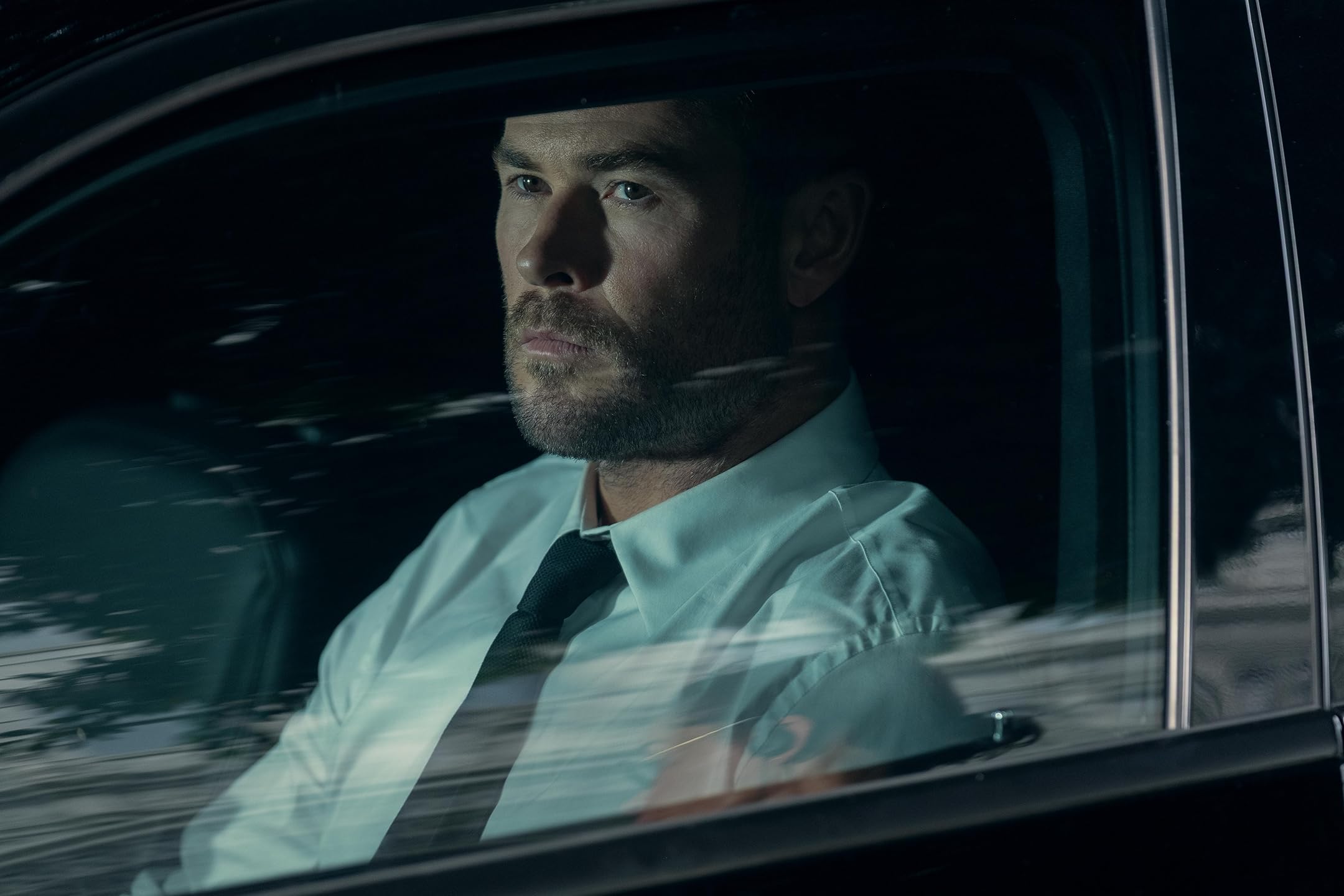
With a rather convincing American accent, Hemsworth turns in a performance which ranks among his best dramatic work. Rather than leaning into the swaggering confidence typically associated with master criminals, Hemsworth plays Mike as a mass of barely contained anxiety. His eyes constantly dart around the room, his fingers fidget, and there’s an edginess to his movements that suggests someone perpetually convinced the walls are closing in. Mark Ruffalo, meanwhile, seems born to play Lou Lubesnick, the rumpled LAPD detective who happens to be the only cop convinced a recent series of high value robberies are connected. Watching Hemsworth and Ruffalo share the screen outside the confines of the MCU creates an entirely different dynamic, and their eventual confrontation in the film’s climactic robbery is grade-A suspense.
Halle Berry does solid work as Sharon, an insurance broker fighting both the glass ceiling at her firm and the creeping realization that her employers value youth and beauty over experience and intelligence. Berry gets one particularly great scene where where she’s finally had enough of the boys’ club bullshit, and she brings enough fire to the role that you almost don’t notice how frequently Sharon’s motivations shift to serve the plot. Barry Keoghan, cast as the chaotic foil to Hemsworth’s meticulous professional, delivers exactly what’s expected; he’s the most reliable actor working today when you need an unhinged psychopath, but this feels like old hat for him, the sort of role he could knock out between breakfast and lunch.
Where Crime 101 stumbles is in its structure. At 140 minutes, the film occasionally loses momentum, and certain characters (Nick Nolte’s fence among them) disappear from the story with dangling plot threads that never get resolved. Monica Barbaro, so magnetic in A Complete Unknown, makes the most of her role as Mike’s love interest, but the character feels so inessential that you could excise the entire romantic subplot without really affecting the overall narrative. Perhaps most frustrating is the film’s conclusion, which wraps everything up far too neatly when ambiguity would have been more satisfying (and likely more honest).
My wife calls this a “dad movie,” and I can’t really argue with her assessment. Crime 101 is precisely the sort of film aimed squarely at audiences who miss thoughtful, adult-oriented thrillers, and it achieves exactly what it sets out to achieve — no more, and no less. Whether Hollywood can sustain a market for films like this remains an open question, but it’s encouraging to spend a couple hours with the kind of confident, professional filmmaking that once filled multiplexes every weekend. Christ, have I really reached the “back in my day” stage of adulthood?