
If the marketing campaign is to be believed, Verity is a dark, sinister thriller full of twisted secrets, and truth be told, that’s exactly the film I was hoping for when I took my seat. I should probably acknowledge that I walked in as a complete Colleen Hoover novice (I was vaguely aware of the name, but I’ve never read her books or seen any of the previous adaptations), so I had no particular loyalty to the source material. Regrettably, the film I experienced wasn’t sinister so much as campy, and I don’t think that’s by design. It’s a byproduct of everything else going wrong.
The premise certainly has potential: Lowen (Dakota Johnson), a novelist whose books nobody seems to be buying, is hired to finish a wildly popular series by bestselling author Verity Crawford (Anne Hathaway), who’s been left catatonic after a car accident. The job means moving into the Crawford family home — an absolutely gorgeous piece of Vermont real estate, I’ll admit — where Lowen stumbles across Verity’s unpublished autobiography, hidden on a USB drive tucked into a pack of cigarettes. The manuscript hints that Verity may have plenty in common with the troubled, violent characters that haunt the pages of her books, but rather than delve further into the implications, Lowen instead lets this simmer while simultaneously taking a keen interest in Verity’s husband, Jeremy (Josh Hartnett). The trouble is, the central “mystery” of the film isn’t much of a mystery at all, because there’s only one logical place for it to go, and the supposedly shocking events along the way are undercut by one baffling character choice after another.
It doesn’t help that Johnson, who I loved in The Materialists, gives such a flat, lifeless performance. A movie like this needs some spark of envy or lust driving its protagonist, and I never caught so much as a flicker, which makes Lowen’s transformation awfully tough to swallow. She and Hartnett have zero chemistry, to the point where their “flirty banter” had my screening audience laughing, and the “erotic” scenes fared even worse: a passage from Verity’s manuscript involving bite marks in a wooden headboard is silly enough on its own, but when the film later recreates it with Lowen in Verity’s place, the crowd was full-on guffawing.
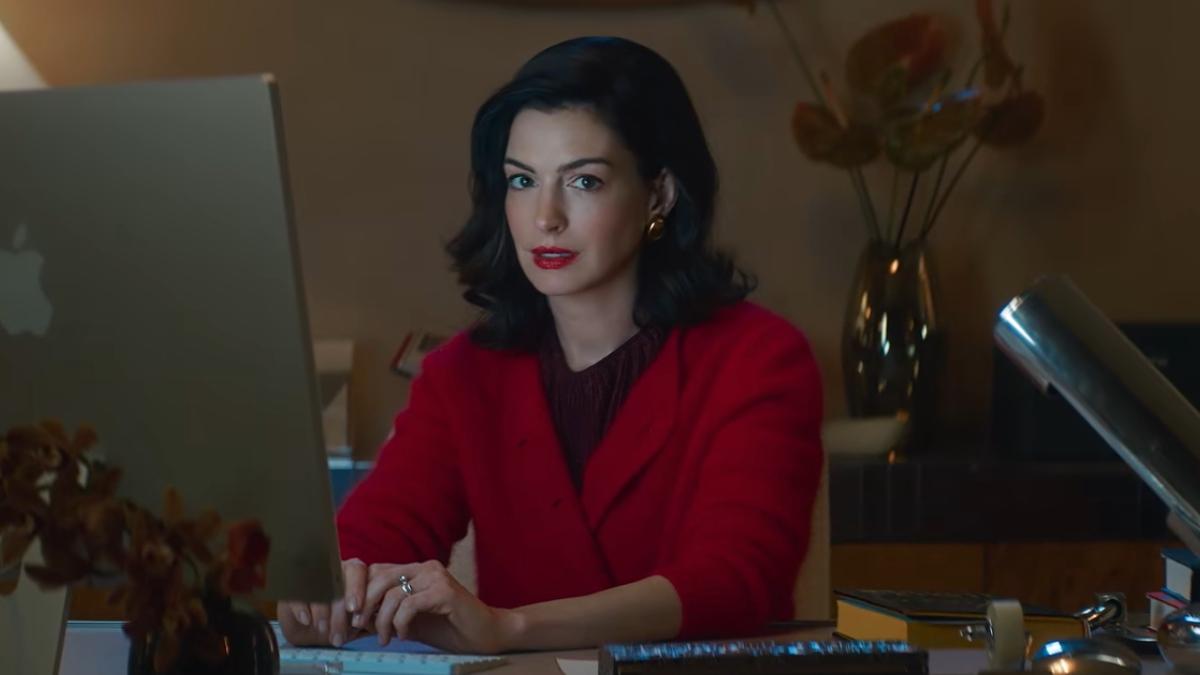
As for Hathaway, I’m still puzzling over why she’s here. Verity spends most of the film in a catatonic state, so it’s hardly a job that demands an actor of Hathaway’s caliber and range, and when we do hear from her, it’s often through voiceover narration of her character’s manuscript, and it’s just plain terrible. In fairness, I’m not sure anyone could’ve salvaged this prose; it feels like something you might find in an online fanfic forum. Hartnett fares best, mostly because he’s the only character who feels even remotely close to an actual human being, and he’s got great, believable chemistry with his onscreen son. But even Hartnett is forced to deliver some absolute clunkers; Nick Antosca’s screenplay isn’t doing him (or anyone else) any favors.
Verity clearly aspires to stand alongside the sort of erotic thrillers that permeated video store shelves in the 90s, but it’s nowhere remotely close. By the time the ending arrives with revelations meant to leave us reeling, it’s difficult to actually give a shit. If you absolutely must see it, then let me advise waiting until you can round up some friends, pour a few glasses of wine and cackle at the absurdity together. That’s about the best experience you can hope for with this one.