
By sheer happenstance, my screening of The Hunger Games: Sunrise on the Reaping landed on the morning after the US midterm elections. Walking into a film about young people rebelling against a fascist government, having just watched something similar unfold in the real world, certainly sharpened the experience for me. There was an undeniable synergy between the timing and one of the film’s central tenets: that revolution is a slow and often painful process whose seeds may not bear fruit for years to come.
Generally speaking, I’ve been along for this ride since the beginning. I was a fan of Suzanne Collins’ original trilogy long before Jennifer Lawrence ever picked up a bow, I called Gary Ross’ The Hunger Games the best film of the year (granted, it was only March when I said that), and I thought Francis Lawrence’s Catching Fire topped it in nearly every respect. The Ballad of Songbirds and Snakes, on the other hand, left me pretty lukewarm. It had a promising first half and a pair of capable leads, but the back half seemed to lose a crucial chunk of connective tissue in the edit, and frankly, I never gave much of a shit about what led a young Coriolanus Snow down the road to fascism in the first place.
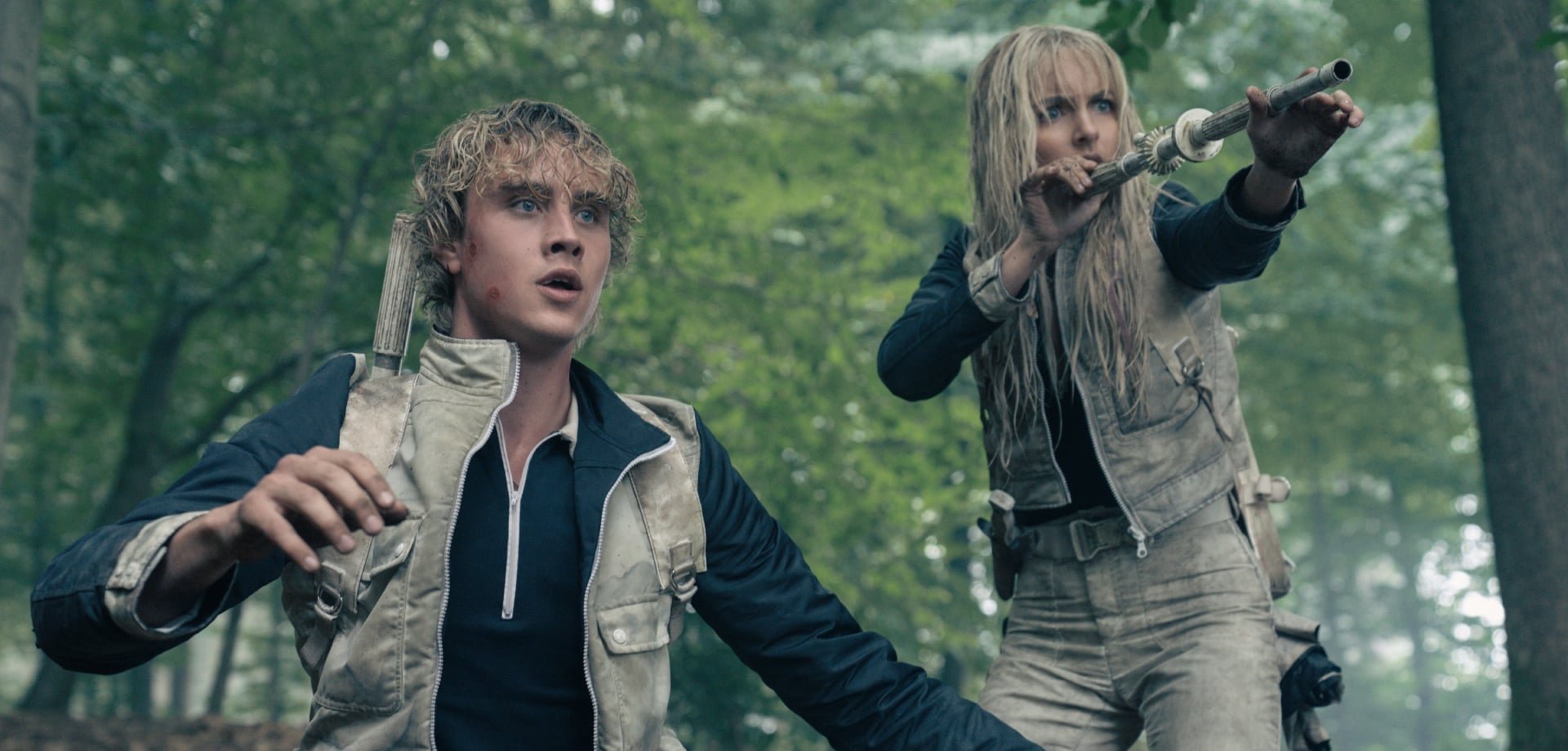
So my expectations for a second prequel were modest, to put it kindly. Which makes it all the more pleasant to report that Sunrise on the Reaping goes a long way toward balancing the scales. Set 24 years before the events of the original film, the story centers on a teenage Haymitch Abernathy (Joseph Zada), the boozy, sardonic mentor Woody Harrelson played across the first four films. Haymitch’s 16th birthday happens to coincide with the reaping for the 50th Hunger Games, and it’s a Quarter Quell year, which means each district must send twice the usual number of tributes into the arena. Through a sequence of events best left for you to discover, Haymitch winds up as one of them.
The supporting cast is enormous, and a handful of bigger names get little more than a scene or two, but several make the most of their time. Glenn Close is a nasty piece of work as Drusilla Sickle, the District 12 escort who regards her charges as something she’d scrape off the bottom of her shoe, and she’s buried under so much Capitol finery that I genuinely had no idea it was her until the credits rolled (I also hadn’t seen a single trailer or read any press about the film beforehand). The actors stepping into younger versions of beloved characters — Elle Fanning as Effie Trinket, Kieran Culkin as Caesar Flickerman and Ralph Fiennes inheriting the presidency from the late Donald Sutherland, among others — all turn in serviceable work, though none quite manages to outshine their predecessors.
The real standout is Jesse Plemons as Plutarch Heavensbee, the role Philip Seymour Hoffman made so wonderfully sinister in Catching Fire. Here, Plutarch is a younger man overseeing the Games’ broadcast, and Plemons plays him with that placid, unreadable calm that’s become something of a trademark. You’re never entirely sure whose side he’s on, and I suspect that’s exactly the point. His job isn’t so much capturing what happens as deciding what the folks at home get to see, and watching him calmly call for retakes during the Reaping, as though he’s directing a soap commercial rather than sending children off to die, is arguably more chilling than anything that happens once the Games actually begin.
That idea, of real events carefully reshaped into a completely different narrative to suit a specific set of political ideals, turns out to be the most interesting thing on the film’s mind. We see this sort of thing on social media every single day, and the only thing scarier than the notion of people willing to do it is just how effective it can be on those who lack the capacity for logic, reason and critical thought. Collins has always been preoccupied with how spectacle gets weaponized, but this is the first entry in the series more concerned with the edit than the event itself, and in 2026, it feels uncomfortably close to home.
None of this would work without the right Haymitch, and Zada is a genuine find. He’s got Harrelson’s charm and that unmistakable Appalachian accent down cold, but what impressed me more is the sweetness underneath. Harrelson’s Haymitch was a drunk, but he was never cruel, and there was always a decent man buried under all that bitterness; Zada shows us that man before the Capitol got its hands on him, earnest and reckless and defiant, and above all, stubbornly convinced the system can be beaten. His performance is in lockstep with Harrelson’s work in the original films, and knowing who this kid becomes makes the journey feel all the more tragic.
Lawrence’s previous film, The Long Walk, was so unflinching in its depiction of state-sanctioned killing that it made the Hunger Games movies look like a leisurely stroll through the park, so I’ll admit I was curious whether some of that ferocity might bleed over. But it’s within the arena where the film pulls its punches, with many of the character deaths occurring offscreen, and the ones we witness staying safely within the PG-13 guardrails. Don’t expect any envelope pushing here. At 158 minutes, it’s also longer than it needs to be, and trimming 15 or 20 minutes would have done wonders for the pacing. Funnily enough, it’s the opposite problem from Ballad, which felt like too much had been left on the cutting room floor; here, a little more time with the scissors would’ve been welcome.
Make no mistake, this one is for the fans, whether you came to Panem through the books, the films or both. Sunrise on the Reaping assumes a baseline knowledge of the universe and spends very little time on exposition, so newcomers would be better served starting at the beginning. But if you’ve been following this series since 2012, I think you’ll find it’s the prequel Ballad should have been: a story about a kid who looks at a rigged system and, knowing full well he can’t win, decides to fight it anyway. The film closes with a surprise that I won’t spoil, a sweet touch that (I hope) serves as the final bookend for this franchise. It’s not as though there’s much left to say about Panem that hasn’t already been said, and ending on a note that ties back to where this whole thing started seems like the right call.